I remember standing in my kitchen at 10 p.m. on a Sunday night, staring at a peace lily that looked like it had been run over by a car. Every leaf was drooping to the floor, begging for water. Three feet away, a succulent sat in its pot, bloated and splitting open because I had watered it the same day. I had fifteen plants at that point, and I was pretty sure twelve of them were in various stages of decline. Some had yellow leaves. Some had brown tips. One pothos had dropped so many leaves that it was just a bare vine with a tuft of green at the end. I felt like I was running a hospice, not a home.
The worst part was that I was trying. I had read the tags. “Bright indirect light.” “Water when dry.” “Easy care.” Those phrases meant almost nothing in practice. What exactly is “bright indirect”? How dry is “dry”? And why did every plant seem to need something different on a different day? I would go weeks without noticing them, then panic-water everything on Sunday night because I felt guilty. That cycle—neglect, panic, overcorrection—killed more plants than genuine ignorance ever could.
What changed was not that I learned some magic botany secret. It was that I stopped treating plant care like a crisis response and started treating it like maintenance. Like brushing your teeth or doing laundry. I built a simple, repeatable system that took the guesswork out of daily care and replaced it with observation and rhythm. My plants stopped dying. More surprisingly, they started growing. Now I have a home full of thriving greenery that actually looks cared for, not just survived. If you are tired of the guilt cycle and want a practical way to keep your plants alive without making them your second job, this is exactly what I do.
Why Plant Care Feels Impossible (Even When It Should Be Easy)
The problem is not that you are bad at plants. The problem is that the advice you are given is almost universally vague. “Water regularly.” “Keep moist.” “Avoid direct sun.” These are meaningless in the context of your actual home, your actual schedule, and your actual environment. My apartment has dry winter air, inconsistent heating, and windows that face three different directions. A tag written for a greenhouse in Florida does not account for any of that.
Plus, every plant is a living system with its own metabolism. A fern in a terracotta pot in a dry room might need water twice a week. The same fern in a glazed ceramic pot in a humid bathroom might need water every ten days. The plant is the same. The care is not. When you treat plant maintenance like a universal recipe, you are guaranteed to get it wrong for half your collection.
The real breakthrough for me was realizing that plant care is not about following rules. It is about reading signals and building habits. You do not need a botany degree. You need a system.
Step-by-Step: The Weekly Plant Care System That Saved My Sanity
I do not do everything every day. That was my first mistake—thinking that plant care meant constant attention. I do focused maintenance once a week, and light observation daily. Here is exactly how that breaks down.
Step 1: The Sunday Check-In (The Non-Negotiable Habit)
Every Sunday morning, before I do anything else, I do a full walk-through with a spray bottle of water, a pair of small scissors, and a notepad on my phone. I touch every plant. I look at every leaf, top and bottom. I check the soil surface and two inches down. I look for new growth, which tells me the plant is happy. I look for yellowing, browning, or wilting, which tells me something is off.
This takes twenty minutes for about twenty plants. It is not a chore. It is a check-up. By doing this weekly, I catch problems before they become emergencies. A slight droop on a Monday gets a drink. A yellow leaf on a Wednesday gets removed. By Sunday, I have a full picture of what the week ahead needs.
I also rotate my plants slightly during this check. Plants lean toward light. If you never turn them, they grow lopsided and weak on the shaded side. A quarter turn every Sunday keeps them symmetrical and strong.
Step 2: Water Only When Needed (Not on a Schedule)
This was the hardest habit to break. I used to water every Sunday because it was convenient. But plants do not live on a calendar. They live on biology. Now I water based on the plant, the pot, the season, and the soil.
Here is my actual method. For each plant, I do two tests. First, I lift the pot. If it feels light, the soil is likely dry. If it feels heavy, there is still moisture below. Second, I stick my finger into the soil up to the second knuckle. If it is dry at that depth, I water. If it is damp, I wait.
When I do water, I water thoroughly. I take the plant to the sink or shower if it is small enough, or I pour until water runs from the drainage holes. This ensures the entire root ball gets moisture, not just the top inch. Then I let it drain completely before returning it to its cachepot or saucer. Sitting in standing water is how roots rot.
In winter, when my heat is running and light is low, most of my plants need water half as often as they do in summer. My succulents might go three weeks. My ferns still need weekly attention. The Sunday check-in lets me adjust seasonally without guessing.
Step 3: Feed Like You Are Seasoning Food (Lightly and Regularly)
I used to pour fertilizer in like I was feeding a starving animal. Then I would wonder why my plants got leggy, burned at the tips, or dropped leaves. Overfeeding is real, and it is stressful.
Now I feed only during the growing season—roughly March through September for my climate. I use a balanced liquid organic fertilizer at half the strength recommended on the label. I feed every two to four weeks, not every watering. In the winter, when growth slows, I stop almost entirely. A dormant plant cannot process nutrients, and excess fertilizer salts build up in the soil, damaging roots.
For my flowering plants, I switch to a bloom-boosting formula with slightly higher phosphorus when buds appear. For my foliage plants, I stick with the balanced feed. I always water the soil first, then apply fertilizer to damp soil. This prevents root burn and helps even distribution.
Step 4: Clean the Leaves (They Breathe Through Them)
This is the step I skipped for years, and it made a huge difference once I started. Dust accumulates on leaves, especially broad-leafed plants like monstera, fiddle leaf figs, and rubber plants. That dust blocks light, clogs pores, and makes the plant look dull.
During my Sunday check-in, I wipe the leaves of my larger plants with a damp cloth. For plants with many small leaves, I give them a gentle shower in the sink or mist them lightly. I also remove any dead or yellowing leaves with clean scissors. A plant expends energy trying to save dying tissue. By removing it, you redirect that energy into new growth.
I clean my scissors with rubbing alcohol between plants. It takes ten seconds and prevents transferring any potential disease from one plant to another.
Step 5: Manage Humidity and Temperature (The Invisible Factors)
I live in an apartment with forced-air heating. In January, the humidity drops to twenty percent. That is a desert. My calatheas crisped up. My ferns turned brown. My tropical plants suffered silently until I realized the air itself was the problem.
Now I group my humidity-loving plants together. They create a small microclimate by transpiring moisture. I also run a small humidifier near my sensitive plants during the winter months. It is not for me. It is for them. I keep it set to about fifty percent humidity, which is comfortable for both humans and tropical plants.
Temperature swings are equally damaging. I never place plants near heating vents, radiators, or drafty windows. The hot dry air from a vent will desiccate leaves in days. A cold draft from a winter window can shock a tropical plant overnight. I lost a beautiful bird of paradise because I left it too close to a sliding glass door in February. Now I keep a buffer zone of at least two feet from any heat source or cold draft.
Step 6: Repot Only When Necessary (And Do It Right)
I used to think repotting was an annual spring ritual. It is not. Most houseplants are happier slightly root-bound than drowning in a pot that is too large. I only repot when I see roots growing through the drainage holes, circling the surface, or when water runs straight through the pot without soaking in—meaning the root ball has displaced the soil.
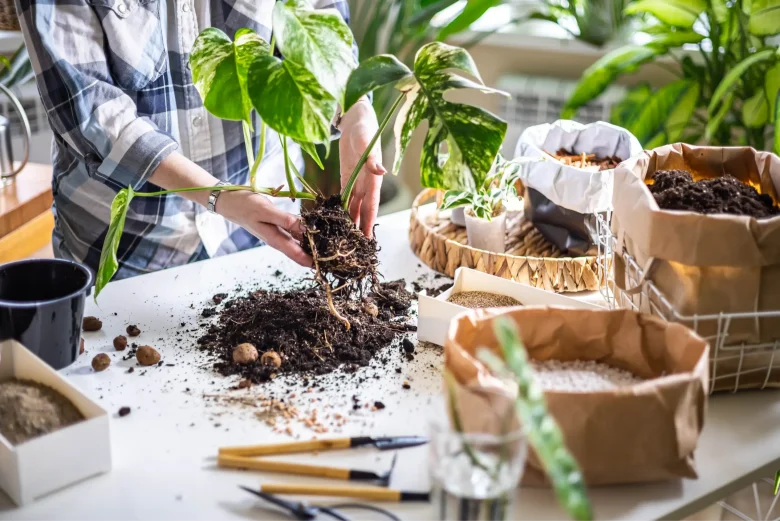
When I do repot, I go up only one pot size. I use fresh potting mix appropriate for the plant. I tease out any circling roots gently so they can expand into the new soil. I water thoroughly after repotting and keep the plant out of direct sun for a week to reduce transplant shock.
I also refresh the top inch of soil on plants that have not been repotted in a while. Over time, soil compacts and loses nutrients. Scooping out the old top layer and replacing it with fresh compost or potting mix gives the plant a boost without the stress of full repotting.
5 Mistakes That Turn Plant Care Into Plant Hospice
These are the specific errors that cost me the most plants.
1. Watering on a rigid schedule. Sunday watering does not work if your cactus is still damp from last week. Check the soil. Lift the pot. Let the plant tell you when it is thirsty.
2. Using decorative pots without drainage. I killed three plants in beautiful ceramic pots with no holes. Now every plant lives in a nursery pot with drainage, sitting inside the decorative pot. I remove it to water, let it drain, then put it back.
3. Ignoring the signs because you are busy. A yellow leaf is not just a yellow leaf. It is data. It is telling you something about water, light, or nutrients. If you keep removing yellow leaves without asking why they are yellow, you will keep getting yellow leaves.
4. Overfeeding out of enthusiasm. More fertilizer does not mean more growth. It means burned roots, salt buildup, and weak, leggy shoots. Feed lightly, feed seasonally, and flush the soil with plain water occasionally to prevent salt accumulation.
5. Keeping plants in the same spot forever. Light changes with the seasons. A plant that thrived in a summer window may struggle in that same window in December when the sun is lower and weaker. I move my plants seasonally to match changing light. My succulents move closer to windows in winter. My shade-lovers move back from harsh summer sun.
Real Examples: A Week in My Plant Care Routine
To show you this is not theory, here is what my actual Sunday check-in looked like last weekend.
I started with the large monstera in my living room. The soil was dry two inches down. The pot felt light. I took it to the shower, watered deeply until it drained, wiped the dust off the broad leaves, and gave it a quarter turn. I noticed one older leaf yellowing at the base. I removed it with scissors and noted that the plant is probably ready for a repot next month—I can see a few roots near the surface.
Next, my peace lily. The soil was still damp from last week, and the plant looked perky. I skipped watering. I misted the leaves because my heat has been running, and I wiped the spathe of the current bloom with a damp cloth to remove dust.
My snake plant in the bedroom was bone dry, as expected. I gave it a moderate drink and moved it slightly away from the window because the afternoon sun has been more intense lately. I checked the leaves for any soft spots—none.
My calathea grouping in the bathroom got a check. The humidifier had been running, and the leaves looked good. No crispy edges. I rotated the grouping and wiped the leaves. I did not water because the soil was still moist.
My succulent collection on the windowsill was completely dry. I gave them a light soak, making sure not to get water in the rosettes where it can cause rot. I checked for any signs of stretching toward the light—none, which means the current window placement is still adequate.
Total time: twenty-two minutes. Total plants checked: nineteen. Total emergencies: zero.
Frequently Asked Questions
How often should I really be watering my houseplants?
There is no universal answer. It depends on the plant species, the pot size and material, the soil mix, the light levels, the temperature, and the humidity. A large plant in a small terracotta pot in bright light might need water twice a week. The same plant in a large glazed pot in low light might need water every two weeks. Check the soil with your finger. Water when it is dry at root depth, not when the calendar says so.
Why do my plant leaves keep turning yellow?
Yellow leaves are a symptom, not a disease. The most common cause is overwatering and poor drainage, which leads to root rot. Less commonly, it can be underwatering, nutrient deficiency, or natural aging of older leaves. If the yellowing starts at the bottom and is accompanied by soggy soil, it is almost certainly overwatering. If the yellowing is uniform and the soil is dry, it might need nutrients or water.
Do I need to mist my plants?
Misting is not a substitute for humidity, but it can help in specific situations. If you have plants that need higher humidity and you live in a dry environment, a humidifier is far more effective than misting. Misting only raises humidity for a few minutes. However, cleaning the leaves with a damp cloth or a gentle shower removes dust and helps the plant photosynthesize. I mist my calatheas and ferns occasionally, but I rely on grouping and a humidifier for real humidity control.
When is the best time to repot a houseplant?
Spring and early summer are ideal because the plant is entering its active growth phase and can recover quickly. However, I only repot when the plant shows signs of being root-bound—roots emerging from drainage holes, water running straight through, or stunted growth despite proper care. Never repot a stressed, sick, or dormant plant unless absolutely necessary.
How do I know if my plant is getting enough light?
Observe its growth pattern. A plant that is stretching toward the light, producing small pale leaves, or dropping lower leaves while the top grows thin is likely not getting enough light. A plant with bleached, scorched, or crispy leaves is getting too much direct sun. Healthy, consistent growth with normal-sized, well-colored leaves usually means the light is adequate. When in doubt, use a light meter app on your phone. Most foliage plants want between 200 and 800 foot-candles of light.
Conclusion: Plant Care Is a Conversation, Not a Command
I spent my first year as a plant owner giving orders and getting silence in return. Water on Sunday. Fertilize in spring. Put it by the window. Then I would blame the plant when it died, as if it had disobeyed. The truth is that plant care and maintenance is a conversation. The plant speaks through its leaves, its growth, its soil, and its posture. Your job is not to impose a schedule. Your job is to learn the language and respond consistently.
When I shifted from crisis management to weekly observation, everything changed. I stopped killing plants. I stopped panicking. I started enjoying the quiet ritual of checking in, cleaning leaves, and noticing new growth. My home got greener. My air felt fresher. And I finally understood what those “easy care” tags actually meant—they were not promising that the plant would survive neglect. They were promising that the plant would forgive you if you paid attention.
Start with one Sunday. Gather your plants. Touch their soil. Look at their leaves. Remove what is dead. Water what is thirsty. Skip what is fine. Write down one observation. Do it again next week. That rhythm, more than any product or tip, is what keeps plants alive. You do not need to be an expert. You just need to show up, look closely, and care before the crisis begins. Your plants are already talking. All you have to do is listen.